Verification Is Overrated: The Tests Passed, and It Still Looked Wrong
Our tests and AI review passed, and still a person often saw at once that something was off. Of the 5,040 pull requests merged since August we undid 0.5%; a test caught only 3% of those, and 57% were about how something looked or felt. Here is what a good pull request brings instead.
On this page
The tests passed and the AI review passed, and still, when a person looked, far more of our changes than we expected were plainly off. Over the last four months that described most of the changes we had to take back. Mario Zechner, who wrote the coding agent Pi, said recently on Matt Pocock's live stream that verification is overrated, and that is what we had been living. Agents work toward whatever can be measured, and a number that checks out does not make the result good. His example was an agent asked to cut an app's startup time, which ripped out the modules and reported a 100% reduction.
Foxl, the personal AI agent we make for the desktop and the phone, is written almost entirely by coding agents. Each change goes up as a pull request. A build and the tests run on it automatically (that is CI), another AI reviews it, and only then is it merged into the main code. So how far could we trust what passed all of that? We counted.
In the four months since August, 5,040 pull requests merged, more than 40 a day. We later undid 0.5% of them, about one in 200. That alone makes the checks look fine. Then we read why each one was undone. A test had caught only 3% of them. More than half, 57%, passed everything and were turned down the moment a person saw the result. Our checks never asked how a screen looked, or how many more steps a change added for you.
The number was right, and the icon was wrong
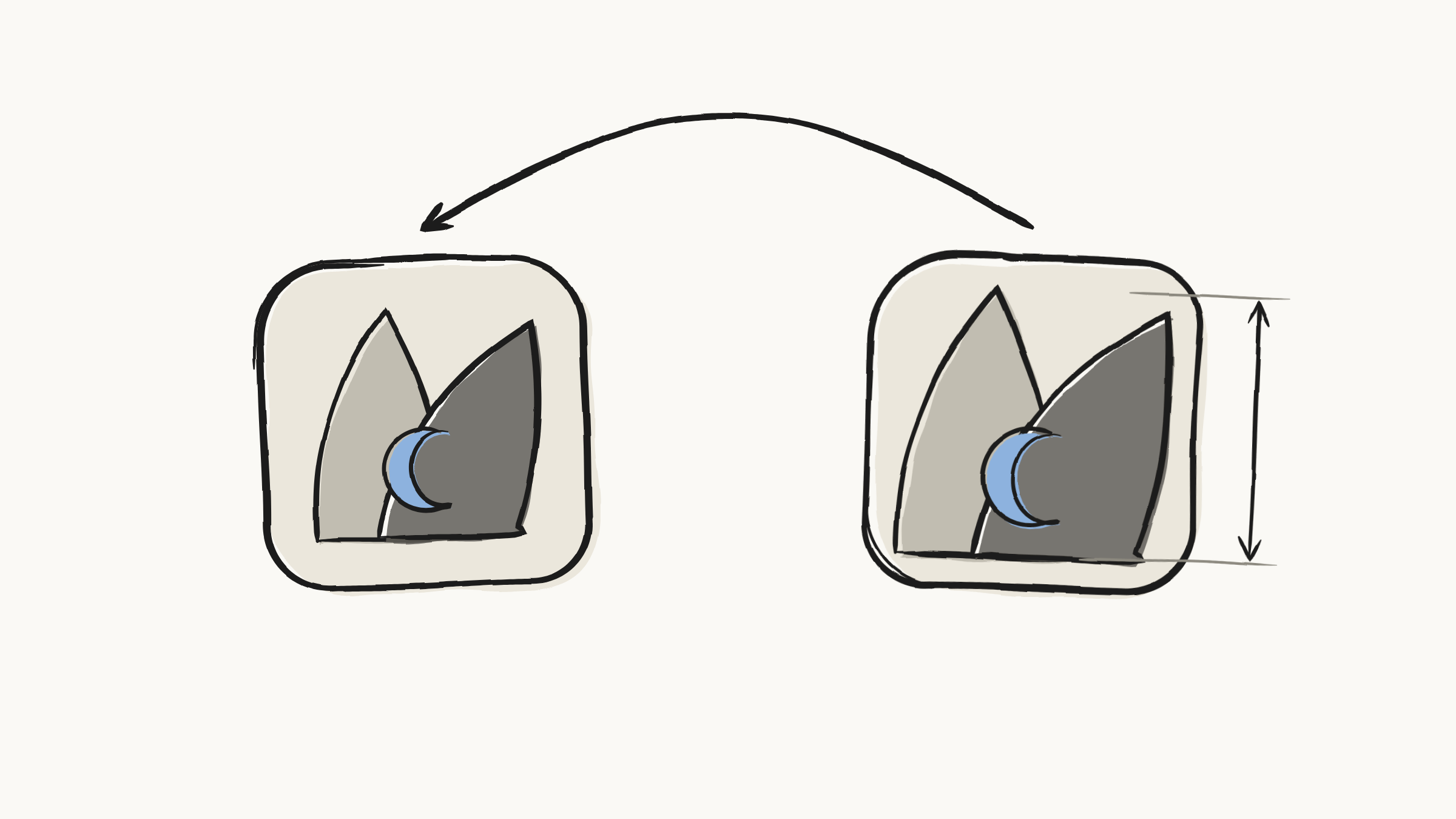
Foxl's app icon is the clearest case. After someone said it looked small beside the other apps, an agent measured the macOS icons. Their artwork filled 81 to 85% of the tile; Foxl's fox mark filled 69%. The agent redrew the fox at 82%, regenerated all twelve icon files, and added a check that the files stayed in step. Every check passed, and the icon shipped that day.
The next morning we put the old one back. The commit says: “The measurements were right and the result is not the icon we want.” The original is on the left, the agent's version on the right.


That pull request was labelled “fix”, meaning a bug fix. A person had only said the icon looked small; the agent turned that into a defect of 69% and fixed the number. It happened more than we expected: over 80% of the undone pull requests labelled as bug fixes (nine of eleven) actually changed how a screen looked or added a confirmation step.
What we undid
To revert a change is to take back something that has already merged and restore what was there before. We counted only changes a later commit says it undoes, so the real number is higher. With the changes that went in just before a release without a pull request of their own, we undid 37 in all. Here they are by reason, one mark per change.
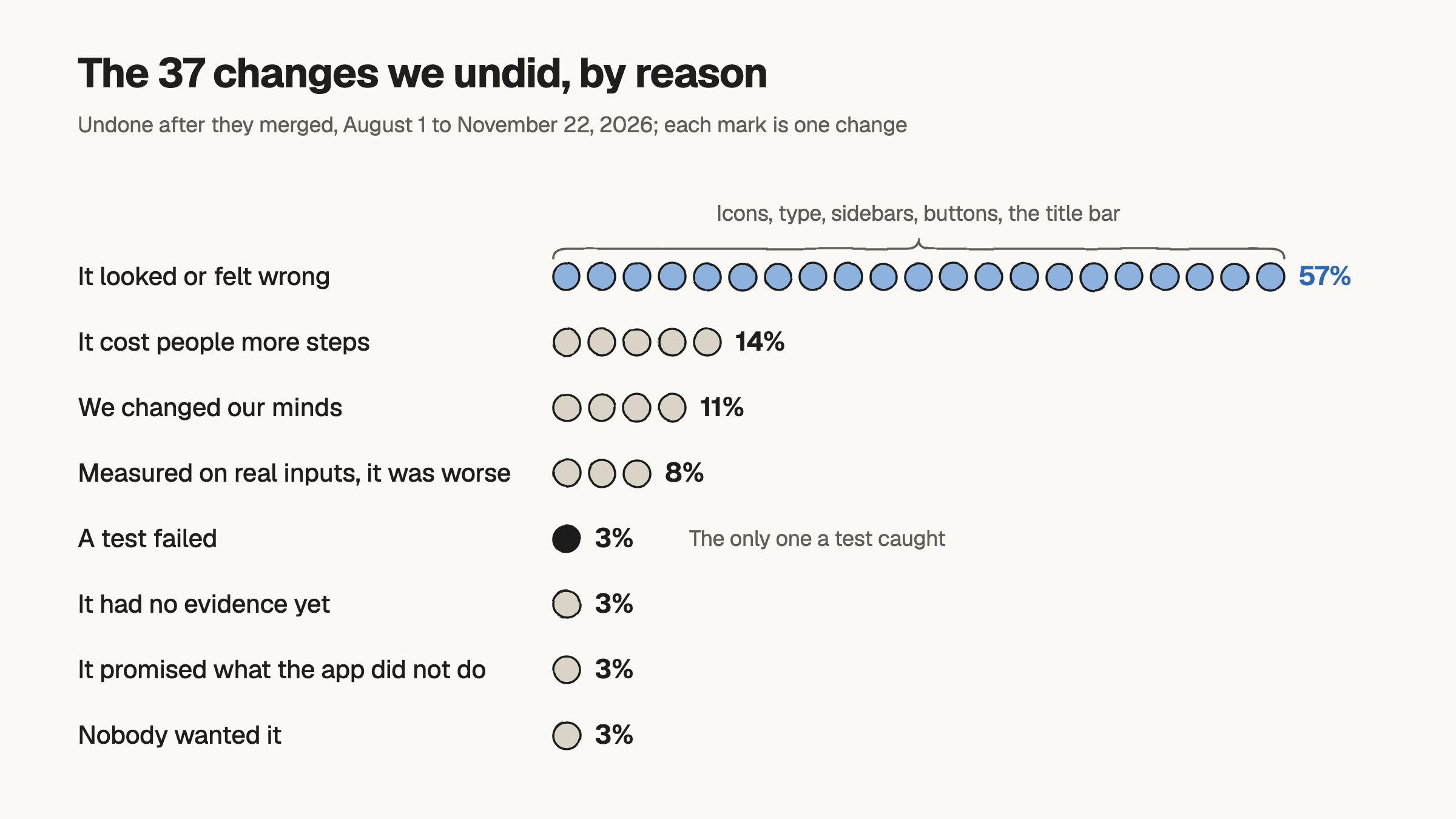
We also looked at which pull requests we undid. We undid 1.3% of new features and 0.4% of bug fixes, so a new feature was about three times as likely to be taken back. Not one pull request that changed 100 lines of code or fewer was undone. The pull requests merged each month nearly quadrupled over those four months, and the share we undid did not rise. Most of what we undid was something you could see.
What the checks did not see
Two right changes that were wrong together. Two pull requests changed the round button at the top of the phone's Settings sheet, one after the other. One showed an X on the first screen; the other darkened the X so that it read as a button. Each met its goal. Together they made the button the loudest thing in the header and changed its shape from screen to screen, and it looked broken. The commit that undid both says the numbers “said the button was more visible, which it was, and that was the problem.” Mario made the same point: modules verified one by one are not verified together.
Safety that got in the way. Armin Ronacher, who created Flask, worried on the same stream that the defensive code models learn as best practice, guarding against every possible input, makes systems more complex. Four of the five changes we undid for costing people more steps added one more confirmation in front of you. One asked for a separate approval before an MCP tool, an outside tool plugged into the agent, could start, though turning the tool on was already the approval. The request never appeared anywhere you could answer it, so a tool that had worked for months stopped. The checks confirmed that the approval step existed. None asked whether a person could answer it.
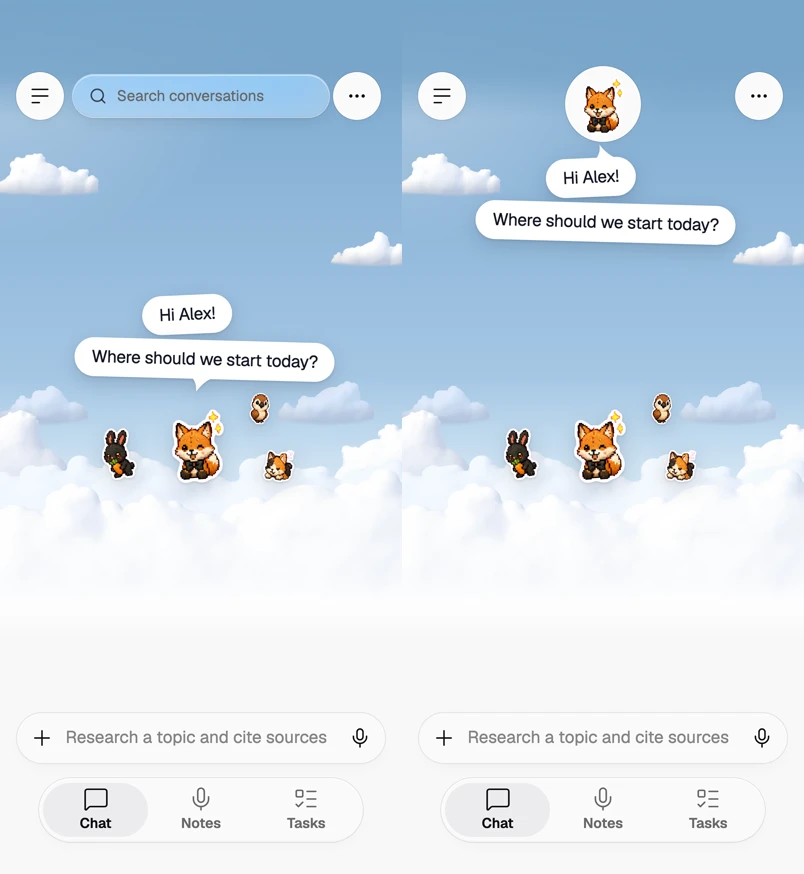
What the AI reviewer was not asked. We asked for a white disc holding the app's fox at the top of the phone app's first screen. The change passed its build, its tests and the AI review. On the screen it looked crude, and we undid it three hours later. Below, the screens before and after, from the pull request itself.
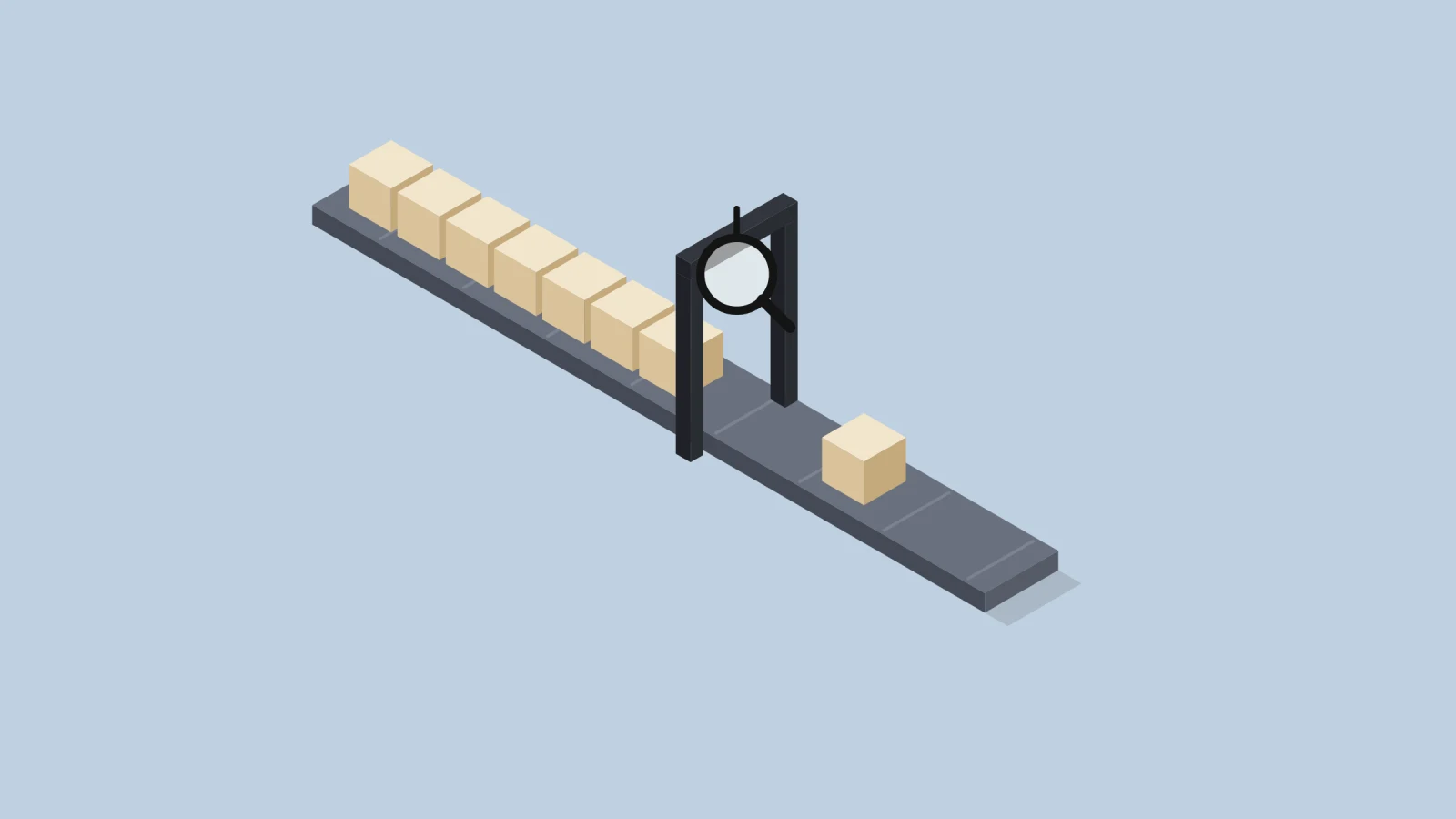
This blog was no different. An AI reviewer read the first draft of one of our posts and said it could be merged; whether the post was any good was not on its list. Ten minutes later we read it and started over. It read like what people now call AI slop, fluent text that could have come from anyone. The first draft's cover comes first below, then the rewrite's.

When verification worked
None of this means verification is useless. Mario said it beats having none, as long as a green CI run is not taken as proof. A check did find 11% of what we undid, but mostly when the result was measured on inputs the agent did not choose, or in the real environment. A change that turned spelled-out Korean numbers into digits came with test sentences written for it, and got 77% of everyday sentences (17 of 22) wrong. A change meant to save money cost more on real tasks. A change meant to let long cloud tasks run past an hour stopped at forty minutes on staging, our copy of the real service. Even the one a test caught was caught only when a test that never finished on its own pull request finally ran before the release.
A good pull request brings its conclusion and its evidence
So a good pull request looks like this one, which had not merged yet as we wrote this. The date labels in Foxl's sidebar, Today, Yesterday and so on, show only while you scroll; this pull request adds an “Always show dates” switch under Settings > Appearance. It adds no test. Instead its description opens with a short paragraph on what changes and why, then the evidence: the real app, seeded with invented chats, shot with the switch off and on, the labels measured, and what it could not verify written down. The switch is off on the left and on at the right.
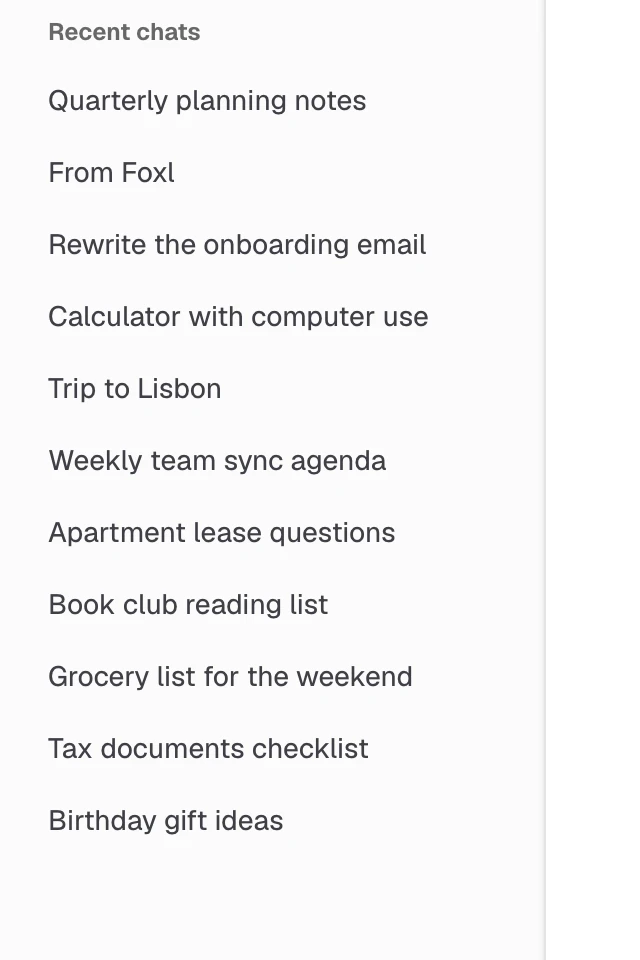
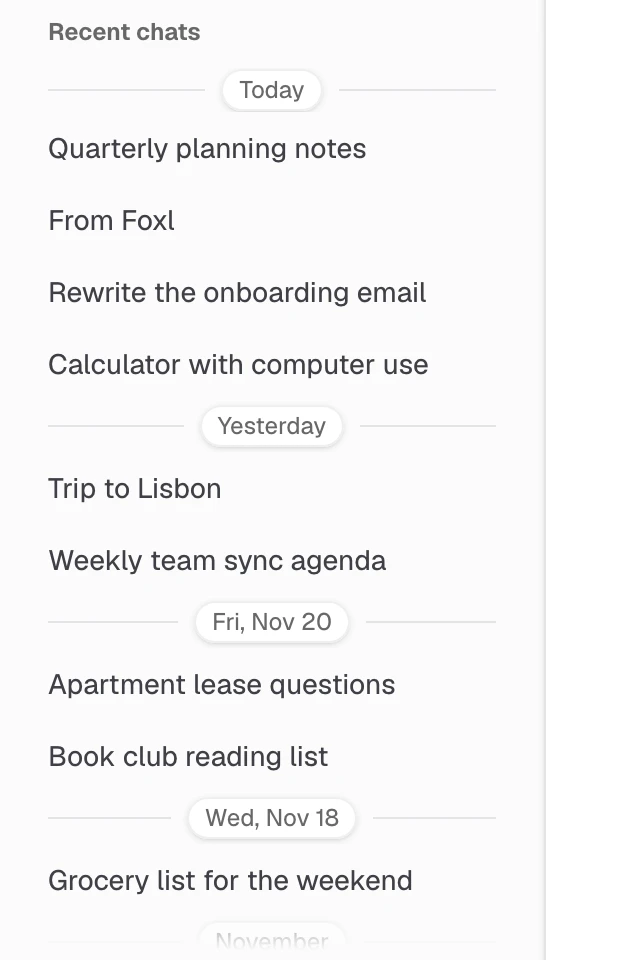
The AI reviewer found nothing to block it and suggested adding the case to an existing test, since the screenshots were the only evidence. That is a fair ask. But a new feature often arrives before it has any test at all: no unit test, no end-to-end test that runs the app from start to finish, no regression test that checks a fix stays fixed. Then the screenshots are the only check there is, and the one a person can judge fastest. What a still cannot show, such as motion, goes in a video. Every pull request of ours now opens with its conclusion and its evidence, and one that changes a screen does not merge without screenshots. We have even reverted a merged change for want of evidence, with one line: hold it until the evidence is collected.
People look at the conclusion and the evidence
When someone has to read all of every pull request's code, the reader becomes the bottleneck. One AI session did almost all of our reviews, and pull requests waited hours to merge. Mario still reads Pi's core code himself, but he said that for parts like HTML export he looks only at the result. We chose to widen that part. People read the conclusion and the evidence, and check a feature by its screenshots, because that is fastest, or by a video when it moves.
That only works if the evidence can be trusted, so we watch three things. We keep looking at flaky tests, the ones that pass and fail on the same code: one that fails, then passes on a second run, still gets a warning and is treated as a bug. In October we fixed 22 of them, and two turned out to be real product bugs. We use staging, a separate copy of the real service; for months after we built it, nothing checked it, and now every database change that cannot be undone goes there first and stops before the real service if it fails. And we shoot evidence in a demo environment, the real app running on the chats and files of a person who does not exist. We built it because there was no reliable way to hide real chat titles in a video. The date switch above was shot that way. Evidence has to come from the real product, and it must not carry a real person's data.
Last, a decision a person makes has to reach the checks too. Had we only restored the old icon files, the agent's new check would have flagged them as out of date, and the next agent would have enlarged the fox again. So the revert deleted the code that enlarged it and wrote down that the ratio was put back on purpose. Foxl's fox still fills 69% of its tile, the number the agent measured.